Native Gardening as an Act of Love
This might be an unpopular opinion, but here’s my hot take on Valentine’s Day:
It’s sweet and all, but it’s also a bit of a grind.
The commercialization of a day meant to celebrate love and connection makes the gestures – chocolate, cards, flowers, fancy dinners – feel more performative than genuine.
Not to mention: the pressure to buy cheap plastic goodies for little classmates puts a weird emphasis on consumerism, which, in my opinion, somehow misses the point of Valentine’s Day. Consumption culture feels more crazy than caring, especially from a sustainability standpoint. It doesn’t stack up next to native gardening as an act of love.
(A little cynical? Maybe. But it feels honest for me. 😅)
I’m planning to celebrate, but in a really low-key way. I’m making a special breakfast on Valentine’s Day (strawberry pancakes dyed pink with a bit of food coloring) and hanging up a festive banner that I decorated on recycled packaging paper.
It’s a way to make my family feel special and give a nod to the holiday, without spending extra money that I don’t have on gifts, or stressing over dinner reservations. Sustainable, simple, and sanity-saving. Highly recommend! 😉
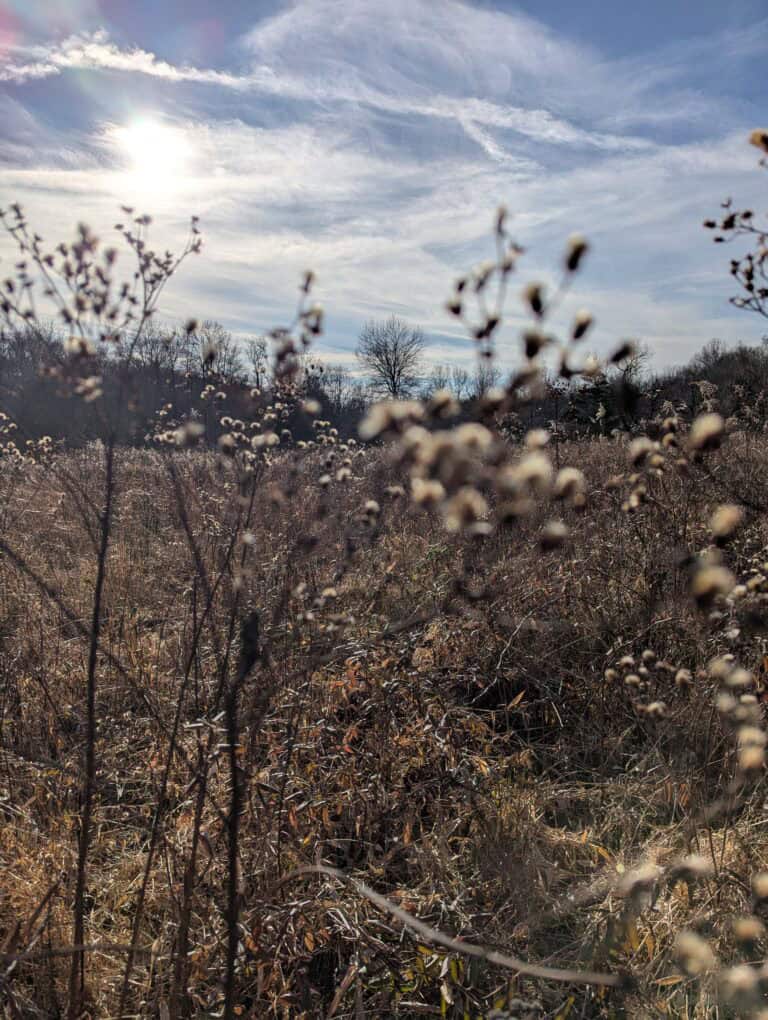
My ultimate act of love, though? It’s currently hiding under a deep layer of snow, dormant and discreet, yet quietly harnessing incredible powers of transformation.
It’s my native garden, of course! ❤️❤️
Through my garden this year and beyond, I get to show my love and appreciation for my local ecosystem, future generations of humans and wildlife, my neighbors, and my one precious life on this earth.
Read on to experience native gardening as an act of love.
Love isn’t just a feeling – it’s a practice.
Table of Contents
Love as Stewardship, Not Perfection
You may already know – whether from your long-term relationship or your parenting journey – that love asks you to care for someone imperfect and evolving. Tending to a native garden asks the same. In your yard, your love encompasses a dynamic and imperfect ecosystem that might require some of your patience and grace – just like your family!
And just like any healthy, loving relationship requires you to relinquish control, your garden needs that same freedom. That’s a primary benefit of a native garden: it doesn’t require intense micromanagement for you to receive its beauty and abundance.
Sometimes you have to rally to pack a lunchbox, fold a load of laundry, or lend a listening ear, Same in your native garden. You have to show up for your plants and wild neighbors – not with frenzy or perfectionism – even when energy is low. – but with steadiness. Over time, that steadiness becomes devotion.
What It Means to “Love” a Piece of Land
Stewardship changes how we relate to the effort. Loving land changes how we relate to a place.
We can love our land by giving it high-quality attention.
We know our partners feel special when we notice their new haircut or remember a small detail they shared. In the garden, loving attention looks like noticing who already lives there. A new bud forming. A squirrel leaping across the branch of your tree. The first bee of spring, hovering close to your flowers for their first sip of nectar.
When we slow down long enough to acknowledge these small presences, something shifts. The garden stops being a project and becomes a relationship.
And often, when we spend quality time with our gardens, it leads to better quality time with ourselves and our families.
The Sanity Garden Get Started Guide will help you ditch overwhelm and get gardening in no time – snag your copy here.
Native Gardening as a Long-Term Relationship
Native gardens might be the ultimate long-term relationship.
Think about it: native gardens are attractive, generous, and low-maintenance. All qualities that we’d go crazy over in a potential partner. (Goals, am I right?)
You invest a little bit of work upfront to get acquainted and established, and then you receive lasting companionship for years to come, just like any great partnership.
Some of the ways your native garden gives back are invisible, like its ability to capture carbon and retain stormwater. But in other ways, you’ll experience perceptible benefits, like potentially lowering your water bill (due to less watering demands), visits from butterflies, bumblebees, and birds, and plentiful opportunities to build family connection and life skills outdoors.
A long-term relationship with your native garden is built through observation and trust. I liken it to my marriage, in which I get to witness the different seasons of my husband’s life and the perpetual sense of transformation that we undergo together. A native garden invites similar observations: the slow unfolding, the unexpected resilience, the quiet growth.
Native Gardening As An Act of Love That Extends Beyond Ourselves
Native gardening represents an endless act of love, instead of superficial gestures made on one frenzied day each February.
It helps us to create a legacy of love that extends beyond ourselves. When our kids and their peers start families of their own someday, I want them to be able to step into their backyards and see the flicker of fireflies and hear the impressive calls of cicadas with their own senses. I’d hate for populations of these insects to dwindle so much that our children’s only option to experience these wonders of a summer yard is through an old YouTube recording. That would be so sad!
I want to leave my little patch of the earth better than I found it, so generations within the neighborhood always have something wild to witness.
Native gardening is an act of love for local wildlife trying to establish resilient communities among us. The deck is so cruelly stacked against them – the least we can do is offer refuge in our yards as a small but meaningful gesture of compassion.
And it extends outward to our human neighbors, too. When we reduce toxic inputs, quiet the roar of mowers and leaf blowers, and cultivate biodiversity instead of conformity, we model care. We enrich the visual and ecological diversity of our communities with thriving native gardens that offer hope and beauty.
Native Gardening As An Act of Love Starts Small
You don’t need a grand gesture this Valentine’s Day. One small act of care – for yourself, your family, or your environment – is enough.
Maybe that act looks like planning your native garden while snow still rests on the ground. Maybe it looks like sketching a small pocket bed. Maybe it’s simply noticing what already lives in your yard and imagining what could thrive there.
Sometimes, the most powerful expression of love is simply choosing to begin – right where you are.
I created The Sanity Garden Get Started Guide to help busy families move forward without overthinking — one small, doable step at a time.
👉 Download the free starter plan and start where you are.
-Kristen
PS – Pin the image below to your favorite native garden inspo board and spread the love! ❤️