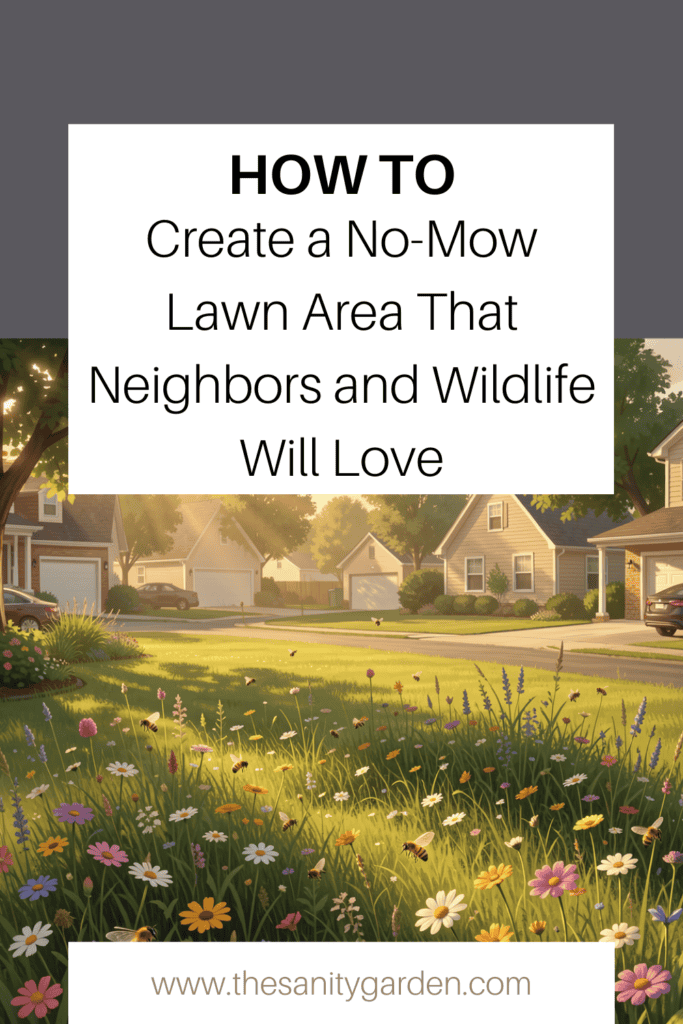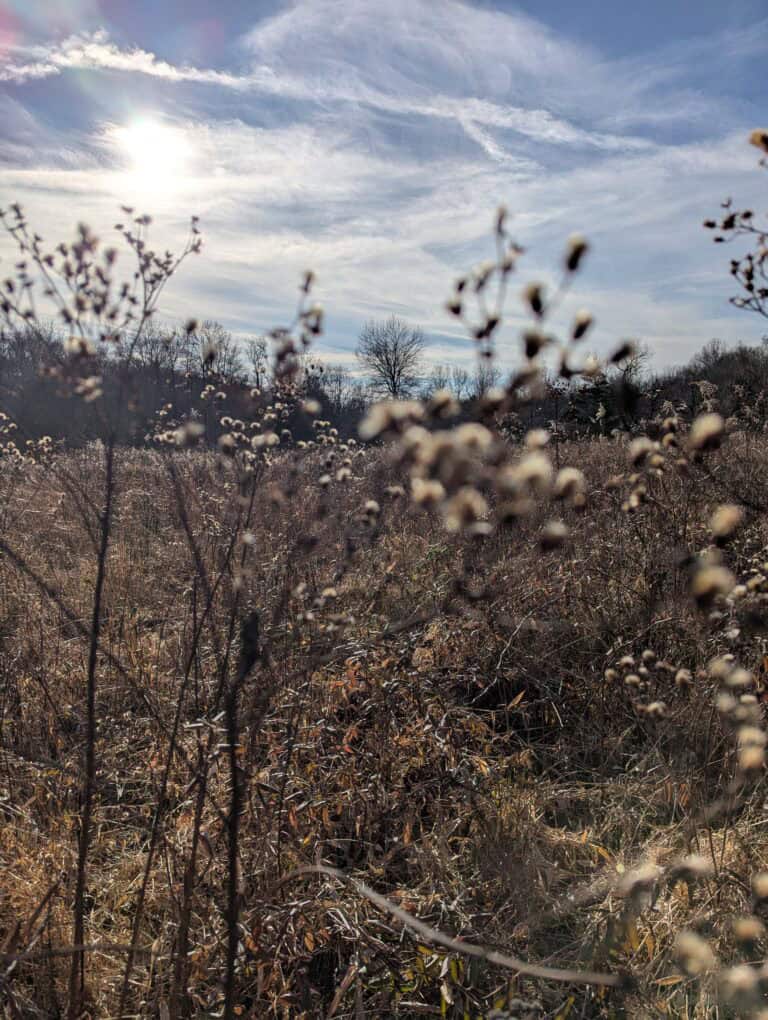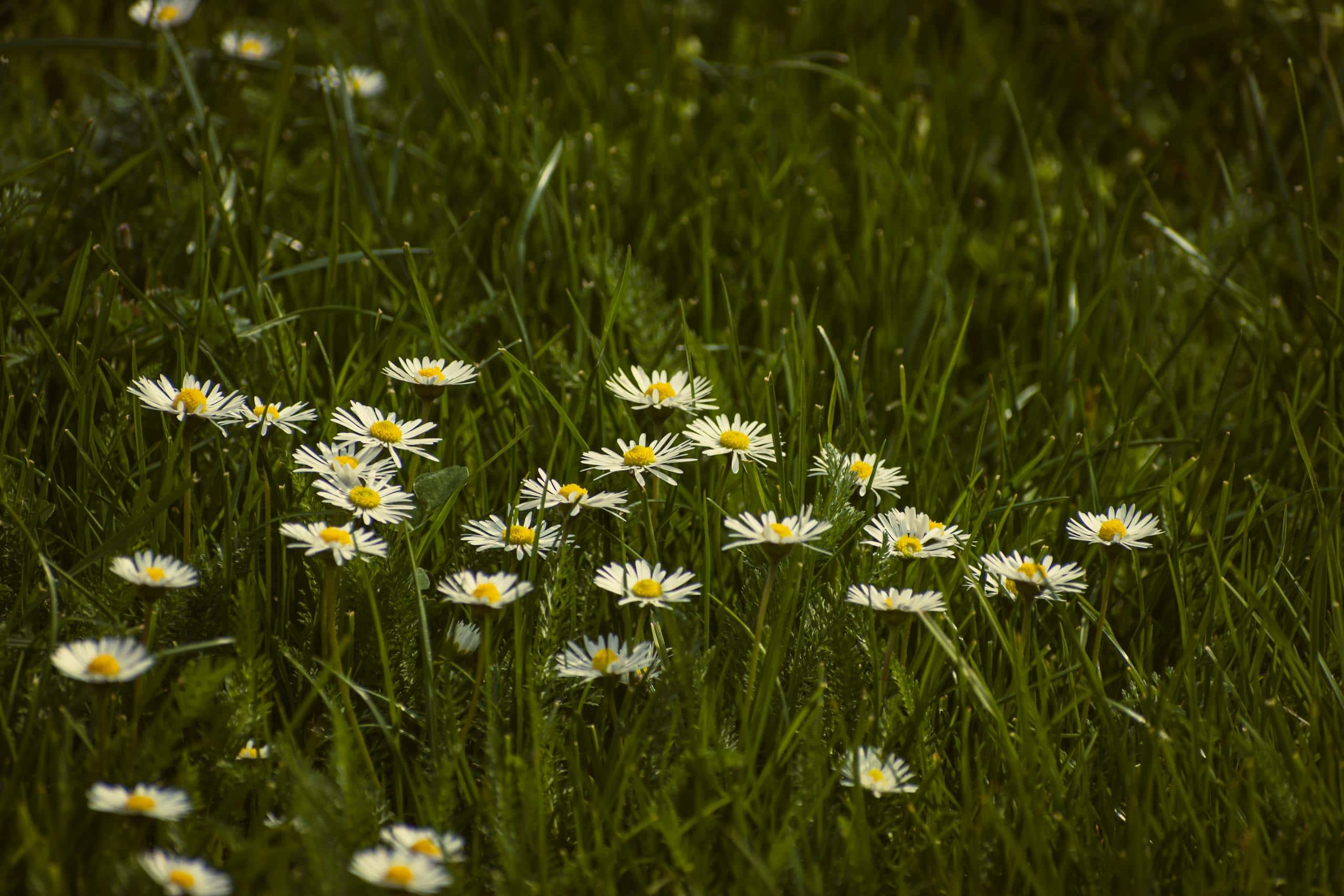
How to Create a No-Mow Lawn Area That Neighbors and Wildlife Will Love
Table of Contents
I was sitting on my front steps on a hot June afternoon, eating strawberry yogurt popsicles with my one-year-old daughter. It was part of our daily summer ritual: head outside, eat a pop, wait for Dad to come home from work, and greet him in the front yard. It was the cutest little “young family fantasy” I could imagine, and I was so happy to actually be living it.
And yet, something felt off.
I looked at the treeless suburban lawns sprawling around me in each direction and my stomach turned. The absence of trees – and their shade – was a brutal reality each time I walked my dog or viewed my electric bill, a reality that I shared with each of my neighbors as we navigated summer without sufficient protection from the heat.
And, as usual, my thinking expanded to include my wild neighbors, too. There’s no habitat here, I thought. Where are the animals supposed to live? How are we all supposed to survive?
I felt overwhelmed: it’s not as if I could transplant dozens of 60-foot white oak trees onto my street the next day and build a new human and fauna-friendly habitat overnight. I had a little person in tow, a super tight single-income budget, and not a lot of restoration know-how.
But doing nothing didn’t feel great, either. I had to do something.
That’s when my eyes scanned across my lawn, where my daughter and I had just been admiring charming little bees buzzing around the clover patches.
💡I had a lightbulb moment.
The next time my husband mowed, that clover would disappear and then there really wouldn’t be anything for the wildlife to eat and enjoy. Yikes. Even though the white clover in my yard isn’t native, I didn’t want to be part of nature’s problems. I wanted to be a lifeline.
The concept of a “no-mow zone”, something I had heard of and even seen in a few small spots outside my community, suddenly seemed like the inevitable next step for me and my eco-conscious family.
My husband’s truck rumbled into view at the top of our street, and I sprung up with my toddler to greet him and share my idea. I was brimming with manic energy and conviction. He was…not. 😅
It took some compromise, but we nurtured a patch of tall grass and clover on our front lawn through the rest of that summer. It provided habitat, food, and shelter for pollinators and reduced our carbon emissions, because we were mowing less.
It didn’t solve the shade problem, but it was the perfect way to dip our toes into conservation landscaping and demonstrate our environmental values in a visible, impactful way.
👉 If you’re curious about how a no-mow (or low-mow) zone could work for your lawn, this post will teach you how to get started, along with how to handle skeptics and how to normalize no-mow zones in our communities.
Why is a no-mow zone a no-brainer?
Creating a no-mow zone on your property is a win-win for you and for the ecosystem. The most obvious reason is because it is a completely FREE way to restore biodiversity and support your ecosystem. But it has other benefits, too.
As a homeowner, your no-mow zone will:
- Prevent soil erosion
The topsoil in our yards is rich in nutrients, and when it’s not held in place by the strong, deep root systems of a no-mow zone, it can wash away, depleting the fertility of your yard and potentially contaminating the local watershed where it ends up.
- Improve drainage
The no-mow zone will act as a sponge, preventing water runoff in the same way that it prevents soil erosion, which keeps waterways cleaner for wildlife and humans who rely on them for drinking water. It also reduces the need to water your lawn, since it will naturally store more water, and the no-mow zone can help absorb more standing water on your property.
- Lower your carbon footprint
By using your lawn mower less, you’ll be emitting less carbon into the atmosphere. Also: trapped carbon is released each time soil is disturbed. By preventing erosion, you are keeping more carbon stored in the ground, where it serves as a food source for microbes and provides structural integrity for the soil.
- Save time and money on mowing and fuel/maintenance
When we started our no-mow zone, my husband had more time to actually play with us in the yard on the weekend, instead of hustling around doing lawn-related chores. Such a perk! Plus, we kept some money in our pockets by using less fuel and putting less wear-and-tear on our mower.
For wildlife, your no-mow zone will:
- Create habitat for insects and birds
- Shelter wildlife from predators (and human chaos!)
- Offer stable food sources
- Cool the soil surface, which protects soil microbes
Wildlife will appreciate the enhanced resiliency of their ecosystem, and you’ll have increased biodiversity right at home in your yard.
💚 Also, from a purely heart-centered place: a no-mow zone will alleviate the hopelessness and frustration that we can experience when faced with the existential threats of climate change and ecosystem collapse. A no-mow zone is a small act of refusal that has a positive, cascading impact on the wildlife and natural systems in your neighborhood – an impact that you can feel proud of.
How To Create a No-Mow Zone
Step 1: Stop mowing your lawn. Voila!
Just kidding. 😄 While this passive restoration strategy is simple, it does require some planning and maintenance so that you don’t cause issues with your neighbors or your township code enforcement.
🚨It’s important to note that you likely can’t skip mowing entirely. A completely unmanaged lawn can result in complaints, fines, fire risks, the spreading of noxious weeds, and can invite unwanted pests like ticks.
Here are some no-mow zone guidelines for success:
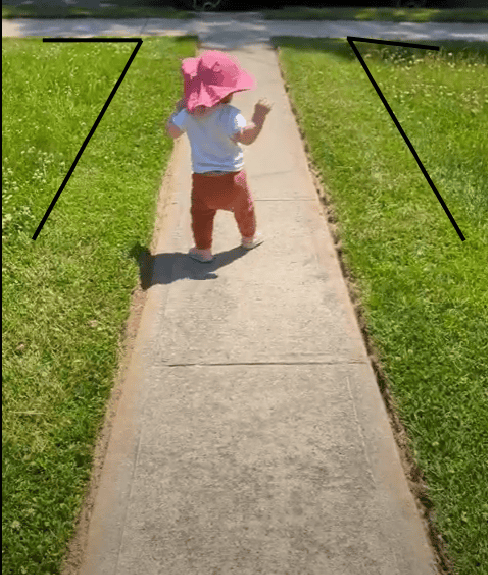
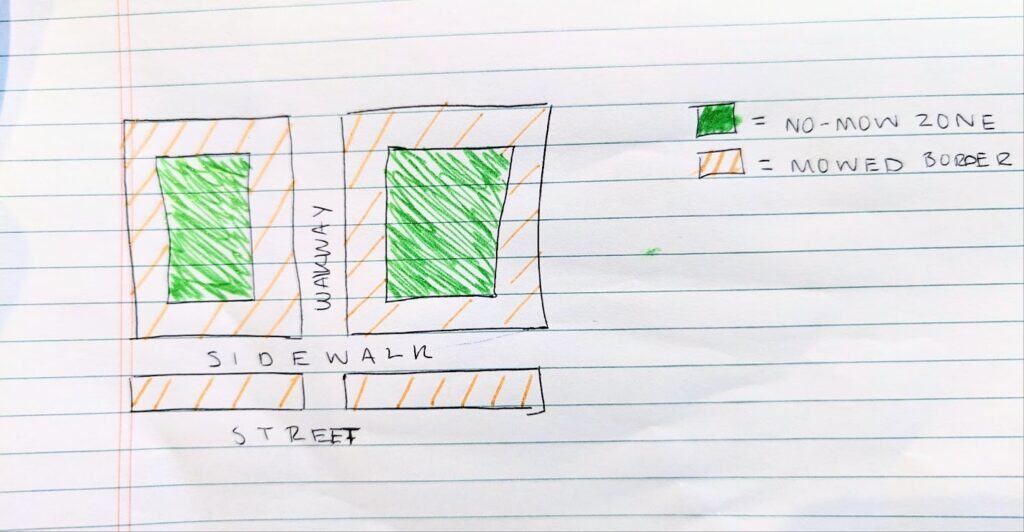
- Don’t make your whole lawn a no-mow zone – pick a small area that is recessed from the sidewalk so that overgrowth doesn’t spill onto walkways and create a hazard. Make sure you evaluate sight lines, to ensure taller plants won’t block visibility for cars and pedestrians.
- Mow the grass around your no-mow zone to create a border. Giving the zone defined edges helps assure neighbors that this is a deliberate act of land stewardship, instead of a descent into chaos.
- Likewise, mow a path through a larger no-mow zone to make the landscape inviting and accessible to passerby.
- Mow periodically, instead of weekly. And when you do mow, move your mower’s deck up to the highest setting, and leave the grass clippings where they fall as natural mulch that will suppress weeds and restore nutrients to the soil.
- Plan to plant native species into your no-mow zone down the line, or be diligent about weeding out invasives and protecting “volunteer” natives that pop up in your no-mow patch. More on that below.
The ultimate no-mow approach is to plant a native garden – one that includes native grasses, flowers, and shrubs for a resilient habitat that adds pleasant visual interest to your neighborhood. Instead of letting crabgrass and ground ivy sprout haphazardly from your lawn’s seed bank, you can cultivate a no-mow zone that includes eye-catching blooms, edible fruit, and amazing fragrances to delight your neighbors.
🌱 Want help starting a native garden without overwhelm?
My Native Garden Get Started Guide walks you through the first simple steps to turn part of your yard into wildlife habitat – even if you’re starting with a basic suburban lawn like mine.
You’ll learn:
- how to choose an easy first planting area
- which native plants are beginner-friendly
- how to start small without spending a fortune
👇 Click the image below to download the Native Garden Get Started Guide

Handling Opposition and Normalizing No-Mow
When I skipped up to my husband a couple summers ago and told him about my no-mow idea, his reaction kinda took the wind out of my sails.
“Ehhh…we’ll see,” he said.
I wanted him to share my enthusiasm, but I was only growing more desperate as I tried to get him on board.
He wasn’t being deliberately difficult – he’s just a product of the lawn-proud culture that we’re all, unfortunately, a part of. I was quick to recognize that turning it into an argument would be a fast way to alienate us from each other and from our environmental values, and that’s not what The Sanity Garden is all about!
Instead, our resolution came from compromise. I wanted to abruptly stop mowing the whole lawn (because I’m an idealistic, all-or-nothing gal!) and my husband was visibly mortified, saying that it would be unneighborly and attract negative attention from township code enforcement.
And he was right.
The solution was to designate areas of the lawn with the densest clover patches as our no-mow zones and then mow borders around them. It ended up being low-maintenance, attractive, and effective: bees enjoyed that clover for months, and we enjoyed bee-watching.
If you start a no-mow zone in your yard, your partner and/or your neighbors might have a strong opinion about it, similar to my experience. Not to worry! Stay calm and use it as an opportunity to get curious and compromise.
Here are some common no-mow zone objections and how you can handle them:
#1. “A no-mow zone will look messy and/or lower property values.”
Why people say it:
People associate neat, short grass with responsible homeownership. Anything taller can trigger fears about neglect or declining property values.
How to counter it:
Focus on intentional design.
- Frame the area with mowed edges. A crisp border signals care.
- Keep low-mow zones clearly defined (a corner, along a fence, under trees).
- Add a small sign or explanation (“Pollinator Habitat” or “Low-Mow Zone”).
A framed low-mow area actually shows intention. The neat border tells people it’s habitat by design, not neglect.
#2. “It will attract ticks, pests, or snakes.”
Why people say it:
People worry tall vegetation equals more ticks or unwanted wildlife near their home.
How to counter it:
Clarify where ticks actually thrive and how to manage risk.
- Ticks prefer humid leaf litter and dense brush, not open meadow grasses.
- Keeping low-mow zones away from play areas and patios reduces risk.
- Maintain a short “buffer strip” of mowed lawn along paths or seating areas.
Plus: When you make your lawn habitable for wildlife that is higher up the food chain than ticks, you are inviting natural tick predators to move in. Your no-mow zone will attract birds, insects, and marsupials that feast on ticks and manage their population, free of charge!
#3. “It violates local lawn ordinances.”
Why people say it:
Many towns have rules about grass height or “nuisance vegetation.”
How to counter it:
Lean on structure and communication.
- Keep the area clearly maintained (defined shape, trimmed edge).
- Place low-mow zones in less visible areas if necessary.
- Some municipalities allow naturalized landscaping if it’s intentional.
Naturalized areas are often allowed when they’re clearly maintained. Edges, paths, and intentional placement help distinguish habitat from neglect.
From Lawn to Lifeline
Our little clover patch didn’t change the whole neighborhood overnight.
The sun still beat down on our treeless street. The lawns around us were still trimmed short. But inside that small pocket of taller grass and clover, life was happening.
Bees buzzed through the blooms. Birds stopped by to investigate. My daughter and I sat in the yard and watched it all unfold together.
That tiny no-mow zone reminded me of something important: ecological restoration doesn’t have to start with a massive plan, a big budget, or perfect knowledge. Sometimes it starts with simply deciding to leave a small patch of land a little wilder than before.
If you’re feeling the same pull I felt that afternoon on my front steps – wanting to help wildlife, reduce your environmental impact, and create a yard that actually feels alive – you don’t have to figure it all out on your own.
A no-mow zone is often the first step toward a thriving native habitat, and if you’re curious about what comes next, I can help.
My Native Garden Get Started Guide walks you through the first simple steps to begin native gardening without overwhelm. You’ll learn how to start small, work with your existing yard, and create habitat that supports pollinators and wildlife.
👉 Download the Get Started Guide here and start turning your yard into a lifeline for local wildlife.
-Kristen
Pin the image below to your native gardening Pinterest board for easy reference and inspiration!